

All Article Properties:
{
"access_control": false,
"status": "publish",
"objectType": "Article",
"id": "1397034",
"signature": "Article:1397034",
"url": "https://staging.dailymaverick.co.za/article/2022-09-18-four-ways-to-tell-if-your-cat-loves-you-based-on-science/",
"shorturl": "https://staging.dailymaverick.co.za/article/1397034",
"slug": "four-ways-to-tell-if-your-cat-loves-you-based-on-science",
"contentType": {
"id": "1",
"name": "Article",
"slug": "article"
},
"views": 0,
"comments": 0,
"preview_limit": null,
"excludedFromGoogleSearchEngine": 0,
"title": "Four ways to tell if your cat loves you – based on science",
"firstPublished": "2022-09-18 20:00:06",
"lastUpdate": "2022-09-18 19:19:04",
"categories": [
{
"id": "1215",
"name": "Magazine",
"signature": "Category:1215",
"slug": "magazine",
"typeId": {
"typeId": "1",
"name": "Daily Maverick",
"slug": "",
"includeInIssue": "0",
"shortened_domain": "",
"stylesheetClass": "",
"domain": "staging.dailymaverick.co.za",
"articleUrlPrefix": "",
"access_groups": "[]",
"locale": "",
"preview_limit": null
},
"parentId": null,
"parent": [],
"image": "",
"cover": "",
"logo": "",
"paid": "0",
"objectType": "Category",
"url": "https://staging.dailymaverick.co.za/category/magazine/",
"cssCode": "",
"template": "default",
"tagline": "",
"link_param": null,
"description": "",
"metaDescription": "",
"order": "0",
"pageId": null,
"articlesCount": null,
"allowComments": "1",
"accessType": "freecount",
"status": "1",
"children": [],
"cached": false
},
{
"id": "1825",
"name": "Maverick Life",
"signature": "Category:1825",
"slug": "maverick-life",
"typeId": {
"typeId": "1",
"name": "Daily Maverick",
"slug": "",
"includeInIssue": "0",
"shortened_domain": "",
"stylesheetClass": "",
"domain": "staging.dailymaverick.co.za",
"articleUrlPrefix": "",
"access_groups": "[]",
"locale": "",
"preview_limit": null
},
"parentId": null,
"parent": [],
"image": "",
"cover": "",
"logo": "",
"paid": "0",
"objectType": "Category",
"url": "https://staging.dailymaverick.co.za/category/maverick-life/",
"cssCode": "",
"template": "default",
"tagline": "",
"link_param": null,
"description": "",
"metaDescription": "",
"order": "0",
"pageId": null,
"articlesCount": null,
"allowComments": "1",
"accessType": "freecount",
"status": "1",
"children": [],
"cached": false
}
],
"content_length": 4853,
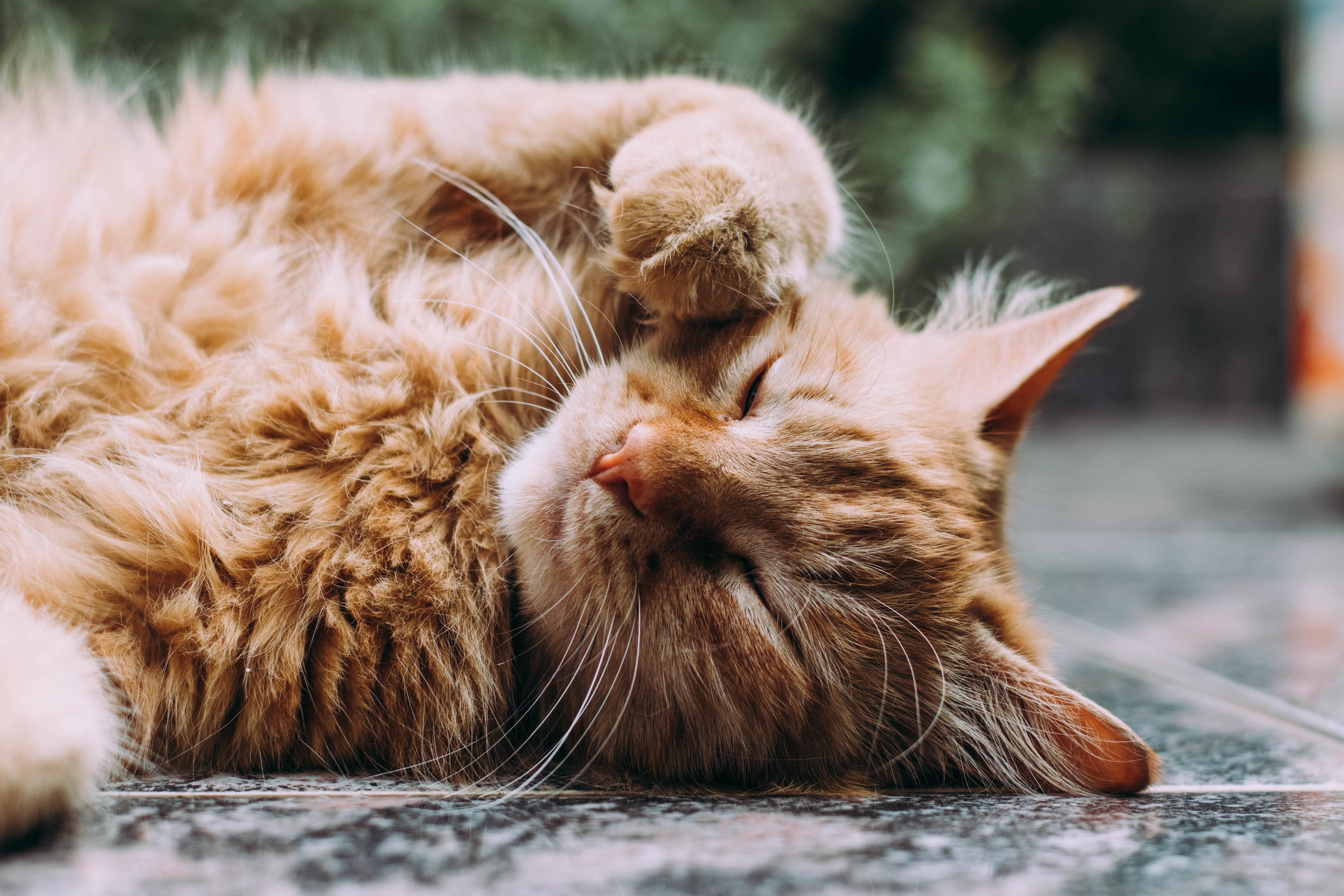
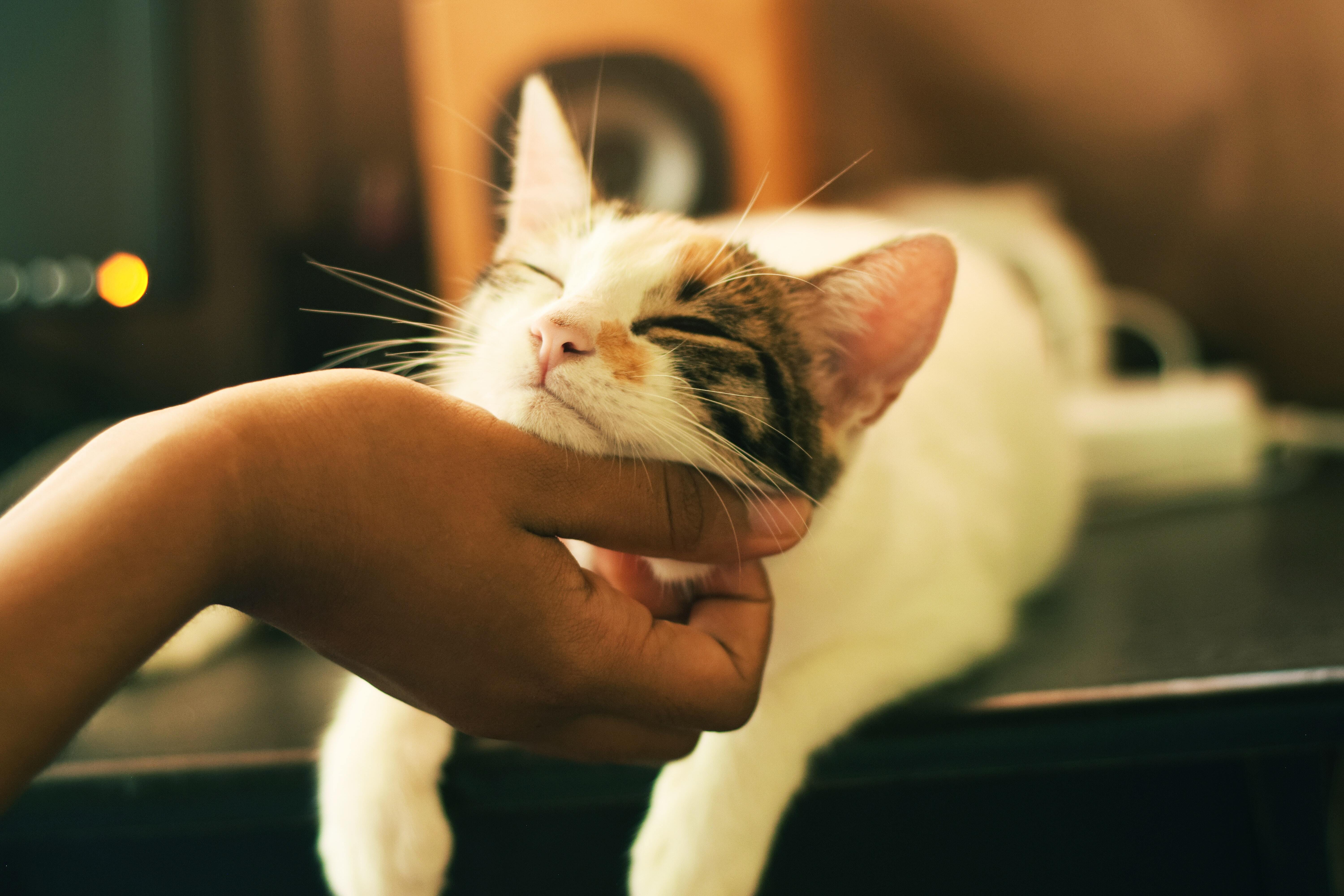
"contents": "Even the most devoted cat owners wonder at some point, perhaps waking up in a cold sweat in the middle of the night, whether their cat really loves them. Dog people like to smugly point out <a href=\"https://discovery.ucl.ac.uk/id/eprint/10065598/1/Martin_Anthropological%20Archaeology.pdf\">dogs’ long history</a> as humankind’s best friend.\r\n\r\nBut research shows cats’ reputation as a cold and aloof pet is undeserved.\r\n\r\nBecause of their evolutionary ancestry, domestic cats are, by their nature, more independent than dogs. The wild ancestors of our cats didn’t live in social groups as canines do. However, during the process of domestication, cats developed the ability to form <a href=\"https://bvajournals.onlinelibrary.wiley.com/doi/epdf/10.1136/vr.f7278?saml_referr%20er\">social relationships</a> not just with other cats, but also with people.\r\n\r\nWhile they may not <a href=\"https://journals.plos.org/plosone/article?id=10.1371/journal.pone.0135109\">rely upon people</a> to feel safe as dogs do, many cats show affection towards their guardians and seem to highly value the company of <a href=\"https://www.sciencedirect.com/science/article/abs/pii/S0376635716303424\">their human companions</a>. Their <a href=\"https://www.tandfonline.com/doi/abs/10.2752/089279302786992702\">attachment</a> to humans is partly influenced by their <a href=\"https://onlinelibrary.wiley.com/doi/epdf/10.1002/dev.22281\">experiences of being handled</a> by people <a href=\"https://onlinelibrary.wiley.com/doi/epdf/10.1002/dev.22281\">as a kitten</a>.\r\n\r\nCats behave towards humans in the same way that they respond to their feline friends, so the secret of whether your cat feels bonded to you lies in their behaviour.\r\n<h4>1. Look out for scenting</h4>\r\nThe ability to communicate with other cats over long distances and when no longer physically present was an advantage to <a href=\"https://eprints.soton.ac.uk/463206/\">their wild ancestors</a>. Our pet cats have retained this “supersense” and rely heavily on this <a href=\"https://www.sciencedirect.com/science/article/abs/pii/0304376283901177\">form of communication </a>.\r\n\r\nIn particular, cats <a href=\"https://www.sciencedirect.com/science/article/abs/pii/S0195561602001286?via%3Dihub\">use scent</a> to identify members of their <a href=\"https://pubmed.ncbi.nlm.nih.gov/15123163/\">social group or family</a>, by sharing a group scent profile. Cats have scent glands on their flanks, head and around their ears, and often rub their heads against people and objects that are <a href=\"https://www.mdpi.com/2076-2615/12/3/298\">familiar and comforting</a>.\r\n\r\nDoes your cat rub its head or side against your legs? The soft sensation you feel against your calves is actually your cat <a href=\"https://journals.sagepub.com/doi/full/10.1177/1098612X18771203\">identifying you as a friend</a> and is a huge compliment.\r\n<h4>2. Watch how they greet you</h4>\r\nOne of the most obvious signs that your beloved pet is fond of you, is the way that your cat greets you. When cats greet members of their social group they show signals to indicate friendship and a desire to move closer. Cats also show these signals to humans.\r\n\r\nA tail held in the upright flagpole position shows a friendly intention (the feline equivalent of a wave), indicating <a href=\"https://www.mdpi.com/2076-2615/12/3/298\">familiarity, trust, and affection</a>. Some cats also use an upright question mark-shaped tail to <a href=\"https://www.amazon.co.uk/Cat-Sense-Feline-Enigma-Revealed/dp/0241960452/ref=asc_df_0241960452/?tag=googshopuk-21&&linkCode=df0&&hvadid=310867999190&&hvpos=&&hvnetw=g&&hvrand=6336591205490181702&&hvpone=&&hvptwo=&&hvqmt=&&hvdev=c&&hvdvcmdl=&&hvlocint=&&hvlocphy=9045619&&hvtargid=pla-466195438793&&psc=1&&th=1&&psc=1\">greet someone they like,</a> or to motion that they want to play.\r\n\r\nCats sometimes <a href=\"https://www.abebooks.co.uk/Decoding-Cat-Ultimate-Experts-Explain-Common/30968807683/bd?cm_mmc=ggl-_-UK_Shopp_Tradestandard-_-product_id=UK9780358566045USED-_-keyword=&gclid=Cj0KCQjw0oyYBhDGARIsAMZEuMuskXOKgchnNG49CDt_BzmuGgtqOwdEcnMJwRsvwx6neqqRevj8zGYaAkEKEALw_wcB\">intertwine their tails</a> as a sign of friendship and the <a href=\"https://www.sciencedirect.com/science/article/abs/pii/S0168159114002779\">human equivalent</a> of this is to wrap their tail around your calf.\r\n\r\n<p><img loading=\"lazy\" class=\"size-full wp-image-1397038\" src=\"https://www.dailymaverick.co.za/wp-content/uploads/2022/09/ludemeula-fernandes-9UUoGaaHtNE-unsplash.jpg\" alt=\"A cat rolls onto its back\" width=\"720\" height=\"480\" /> Image: Ludemeula Fernandes / Unsplash</p>\r\n\r\nRolling over and exposing their vulnerable under belly is another gesture that a cat has ultimate trust in you. However cats prefer to be petted on the head and neck area, so this is not usually a request for a belly rub.\r\n\r\nAttempts to stroke a cat’s belly will often result in a <a href=\"https://journals.sagepub.com/doi/10.1016/j.jfms.2009.09.011\">hasty retreat or even claws</a>. The chirrup or trill greeting is a melodious sound that cats make when saying hello to preferred individuals. So if your cat sings to you in this way, be assured they are pleased to see you.\r\n\r\nThat familiar feeling when your cat hits the back of your knee can also be a sign that they feel an extremely close bond with you. The feline version of a high-five, the head bump is usually saved for a cat’s closest feline friends and most trusted humans.\r\n<h4>3. Look for blinks</h4>\r\nYour cat might also be secretly signalling their affection in the way they look at you. When cats encounter strange humans or other cats they don’t know, they usually greet them with an unblinking stare. But they are more likely to slowly blink at cats they have a good relationship with.\r\n\r\nResearch suggests slow blinks are associated with a positive emotional state and can be a sign of trust, <a href=\"https://www.nature.com/articles/s41598-020-73426-0\">contentment and affection</a>, similar to a human smile. If you wish to return the compliment, blink and your cat might blink back. This is nice a way to bond with your cat if they aren’t keen on being touched.\r\n<h4>4. They get up close</h4>\r\nCats are very protective of their personal space and <a href=\"https://reader.elsevier.com/reader/sd/pii/S0168159199000301?token=B1C25B7B05%204DBACC04EA0BD9C2361E3EE796A686A4EDB45E6FA4BFB13A8FF623947CE59732A3%20C0CEE2498B38B69F739D&originRegion=eu-west-%201&originCreation=20220822094911\">don’t like unwelcome guests</a> to invade it. If a cat allows you to get close to them, that suggests a close bond, particularly where the contact is frequent or long-lasting.\r\n\r\nCurling up on your lap for a nap is a sign of deep trust. Grooming only happens between cats with a warm relationship, so licking your hand or face can be a show of endearment, even though those barbed tongues may not feel all that gentle. <strong>DM/ML <iframe src=\"https://counter.theconversation.com/content/188170/count.gif?distributor=republish-lightbox-advanced\" width=\"1\" height=\"1\"></iframe></strong>\r\n\r\n<a href=\"https://theconversation.com/four-ways-to-tell-if-your-cat-loves-you-based-on-science-188170\"><em>This story was first published in</em> The Conversation. </a><em>Emily Blackwell is a Senior Lecturer in Animal Behaviour and Welfare at the University of Bristol.</em>\r\n\r\n<em>In case you missed it, also read</em> <a href=\"https://www.dailymaverick.co.za/article/2020-12-29-the-cats-ive-loved-and-lost/\">The cats I’ve loved and lost</a>\r\n\r\nhttps://www.dailymaverick.co.za/article/2020-12-29-the-cats-ive-loved-and-lost/\r\n\r\n<hr />\r\n\r\nVisit <a href=\"https://www.dailymaverick.co.za?utm_source=direct&utm_medium=in_article_link&utm_campaign=homepage\"><em>Daily Maverick's</em> home page</a> for more news, analysis and investigations\r\n\r\n<hr />\r\n\r\n ",
"teaser": "Four ways to tell if your cat loves you – based on science",
"externalUrl": "",
"sponsor": null,
"authors": [
{
"id": "290818",
"name": "Emily Blackwell",
"image": "",
"url": "https://staging.dailymaverick.co.za/author/emily-blackwell/",
"editorialName": "emily-blackwell",
"department": "",
"name_latin": ""
}
],
"description": "",
"keywords": [
{
"type": "Keyword",
"data": {
"keywordId": "14536",
"name": "Pets",
"url": "https://staging.dailymaverick.co.za/keyword/pets/",
"slug": "pets",
"description": "",
"articlesCount": 0,
"replacedWith": null,
"display_name": "Pets",
"translations": null
}
},
{
"type": "Keyword",
"data": {
"keywordId": "54046",
"name": "Love",
"url": "https://staging.dailymaverick.co.za/keyword/love/",
"slug": "love",
"description": "",
"articlesCount": 0,
"replacedWith": null,
"display_name": "Love",
"translations": null
}
},
{
"type": "Keyword",
"data": {
"keywordId": "230739",
"name": "animals",
"url": "https://staging.dailymaverick.co.za/keyword/animals/",
"slug": "animals",
"description": "",
"articlesCount": 0,
"replacedWith": null,
"display_name": "animals",
"translations": null
}
},
{
"type": "Keyword",
"data": {
"keywordId": "288998",
"name": "cats",
"url": "https://staging.dailymaverick.co.za/keyword/cats/",
"slug": "cats",
"description": "",
"articlesCount": 0,
"replacedWith": null,
"display_name": "cats",
"translations": null
}
},
{
"type": "Keyword",
"data": {
"keywordId": "385683",
"name": "affection",
"url": "https://staging.dailymaverick.co.za/keyword/affection/",
"slug": "affection",
"description": "",
"articlesCount": 0,
"replacedWith": null,
"display_name": "affection",
"translations": null
}
}
],
"short_summary": null,
"source": null,
"related": [],
"options": [],
"attachments": [
{
"id": "28800",
"name": "Image: Ludemeula Fernandes / Unsplash",
"description": "Even the most devoted cat owners wonder at some point, perhaps waking up in a cold sweat in the middle of the night, whether their cat really loves them. Dog people like to smugly point out <a href=\"https://discovery.ucl.ac.uk/id/eprint/10065598/1/Martin_Anthropological%20Archaeology.pdf\">dogs’ long history</a> as humankind’s best friend.\r\n\r\nBut research shows cats’ reputation as a cold and aloof pet is undeserved.\r\n\r\nBecause of their evolutionary ancestry, domestic cats are, by their nature, more independent than dogs. The wild ancestors of our cats didn’t live in social groups as canines do. However, during the process of domestication, cats developed the ability to form <a href=\"https://bvajournals.onlinelibrary.wiley.com/doi/epdf/10.1136/vr.f7278?saml_referr%20er\">social relationships</a> not just with other cats, but also with people.\r\n\r\nWhile they may not <a href=\"https://journals.plos.org/plosone/article?id=10.1371/journal.pone.0135109\">rely upon people</a> to feel safe as dogs do, many cats show affection towards their guardians and seem to highly value the company of <a href=\"https://www.sciencedirect.com/science/article/abs/pii/S0376635716303424\">their human companions</a>. Their <a href=\"https://www.tandfonline.com/doi/abs/10.2752/089279302786992702\">attachment</a> to humans is partly influenced by their <a href=\"https://onlinelibrary.wiley.com/doi/epdf/10.1002/dev.22281\">experiences of being handled</a> by people <a href=\"https://onlinelibrary.wiley.com/doi/epdf/10.1002/dev.22281\">as a kitten</a>.\r\n\r\nCats behave towards humans in the same way that they respond to their feline friends, so the secret of whether your cat feels bonded to you lies in their behaviour.\r\n<h4>1. Look out for scenting</h4>\r\nThe ability to communicate with other cats over long distances and when no longer physically present was an advantage to <a href=\"https://eprints.soton.ac.uk/463206/\">their wild ancestors</a>. Our pet cats have retained this “supersense” and rely heavily on this <a href=\"https://www.sciencedirect.com/science/article/abs/pii/0304376283901177\">form of communication </a>.\r\n\r\nIn particular, cats <a href=\"https://www.sciencedirect.com/science/article/abs/pii/S0195561602001286?via%3Dihub\">use scent</a> to identify members of their <a href=\"https://pubmed.ncbi.nlm.nih.gov/15123163/\">social group or family</a>, by sharing a group scent profile. Cats have scent glands on their flanks, head and around their ears, and often rub their heads against people and objects that are <a href=\"https://www.mdpi.com/2076-2615/12/3/298\">familiar and comforting</a>.\r\n\r\nDoes your cat rub its head or side against your legs? The soft sensation you feel against your calves is actually your cat <a href=\"https://journals.sagepub.com/doi/full/10.1177/1098612X18771203\">identifying you as a friend</a> and is a huge compliment.\r\n<h4>2. Watch how they greet you</h4>\r\nOne of the most obvious signs that your beloved pet is fond of you, is the way that your cat greets you. When cats greet members of their social group they show signals to indicate friendship and a desire to move closer. Cats also show these signals to humans.\r\n\r\nA tail held in the upright flagpole position shows a friendly intention (the feline equivalent of a wave), indicating <a href=\"https://www.mdpi.com/2076-2615/12/3/298\">familiarity, trust, and affection</a>. Some cats also use an upright question mark-shaped tail to <a href=\"https://www.amazon.co.uk/Cat-Sense-Feline-Enigma-Revealed/dp/0241960452/ref=asc_df_0241960452/?tag=googshopuk-21&&linkCode=df0&&hvadid=310867999190&&hvpos=&&hvnetw=g&&hvrand=6336591205490181702&&hvpone=&&hvptwo=&&hvqmt=&&hvdev=c&&hvdvcmdl=&&hvlocint=&&hvlocphy=9045619&&hvtargid=pla-466195438793&&psc=1&&th=1&&psc=1\">greet someone they like,</a> or to motion that they want to play.\r\n\r\nCats sometimes <a href=\"https://www.abebooks.co.uk/Decoding-Cat-Ultimate-Experts-Explain-Common/30968807683/bd?cm_mmc=ggl-_-UK_Shopp_Tradestandard-_-product_id=UK9780358566045USED-_-keyword=&gclid=Cj0KCQjw0oyYBhDGARIsAMZEuMuskXOKgchnNG49CDt_BzmuGgtqOwdEcnMJwRsvwx6neqqRevj8zGYaAkEKEALw_wcB\">intertwine their tails</a> as a sign of friendship and the <a href=\"https://www.sciencedirect.com/science/article/abs/pii/S0168159114002779\">human equivalent</a> of this is to wrap their tail around your calf.\r\n\r\n[caption id=\"attachment_1397038\" align=\"aligncenter\" width=\"720\"]<img class=\"size-full wp-image-1397038\" src=\"https://www.dailymaverick.co.za/wp-content/uploads/2022/09/ludemeula-fernandes-9UUoGaaHtNE-unsplash.jpg\" alt=\"A cat rolls onto its back\" width=\"720\" height=\"480\" /> Image: Ludemeula Fernandes / Unsplash[/caption]\r\n\r\nRolling over and exposing their vulnerable under belly is another gesture that a cat has ultimate trust in you. However cats prefer to be petted on the head and neck area, so this is not usually a request for a belly rub.\r\n\r\nAttempts to stroke a cat’s belly will often result in a <a href=\"https://journals.sagepub.com/doi/10.1016/j.jfms.2009.09.011\">hasty retreat or even claws</a>. The chirrup or trill greeting is a melodious sound that cats make when saying hello to preferred individuals. So if your cat sings to you in this way, be assured they are pleased to see you.\r\n\r\nThat familiar feeling when your cat hits the back of your knee can also be a sign that they feel an extremely close bond with you. The feline version of a high-five, the head bump is usually saved for a cat’s closest feline friends and most trusted humans.\r\n<h4>3. Look for blinks</h4>\r\nYour cat might also be secretly signalling their affection in the way they look at you. When cats encounter strange humans or other cats they don’t know, they usually greet them with an unblinking stare. But they are more likely to slowly blink at cats they have a good relationship with.\r\n\r\nResearch suggests slow blinks are associated with a positive emotional state and can be a sign of trust, <a href=\"https://www.nature.com/articles/s41598-020-73426-0\">contentment and affection</a>, similar to a human smile. If you wish to return the compliment, blink and your cat might blink back. This is nice a way to bond with your cat if they aren’t keen on being touched.\r\n<h4>4. They get up close</h4>\r\nCats are very protective of their personal space and <a href=\"https://reader.elsevier.com/reader/sd/pii/S0168159199000301?token=B1C25B7B05%204DBACC04EA0BD9C2361E3EE796A686A4EDB45E6FA4BFB13A8FF623947CE59732A3%20C0CEE2498B38B69F739D&originRegion=eu-west-%201&originCreation=20220822094911\">don’t like unwelcome guests</a> to invade it. If a cat allows you to get close to them, that suggests a close bond, particularly where the contact is frequent or long-lasting.\r\n\r\nCurling up on your lap for a nap is a sign of deep trust. Grooming only happens between cats with a warm relationship, so licking your hand or face can be a show of endearment, even though those barbed tongues may not feel all that gentle. <strong>DM/ML <iframe src=\"https://counter.theconversation.com/content/188170/count.gif?distributor=republish-lightbox-advanced\" width=\"1\" height=\"1\"></iframe></strong>\r\n\r\n<a href=\"https://theconversation.com/four-ways-to-tell-if-your-cat-loves-you-based-on-science-188170\"><em>This story was first published in</em> The Conversation. </a><em>Emily Blackwell is a Senior Lecturer in Animal Behaviour and Welfare at the University of Bristol.</em>\r\n\r\n<em>In case you missed it, also read</em> <a href=\"https://www.dailymaverick.co.za/article/2020-12-29-the-cats-ive-loved-and-lost/\">The cats I’ve loved and lost</a>\r\n\r\nhttps://www.dailymaverick.co.za/article/2020-12-29-the-cats-ive-loved-and-lost/\r\n\r\n<hr />\r\n\r\nVisit <a href=\"https://www.dailymaverick.co.za?utm_source=direct&utm_medium=in_article_link&utm_campaign=homepage\"><em>Daily Maverick's</em> home page</a> for more news, analysis and investigations\r\n\r\n<hr />\r\n\r\n ",
"focal": "50% 50%",
"width": 0,
"height": 0,
"url": "https://dmcdn.whitebeard.net/dailymaverick/wp-content/uploads/2022/09/yerlin-matu-GtwiBmtJvaU-unsplash.jpg",
"transforms": [
{
"x": "200",
"y": "100",
"url": "https://dmcdn.whitebeard.net/i/Yb184vb-gCUBxQZKa00yfq25F3I=/200x100/smart/filters:strip_exif()/file/dailymaverick/wp-content/uploads/2022/09/yerlin-matu-GtwiBmtJvaU-unsplash.jpg"
},
{
"x": "450",
"y": "0",
"url": "https://dmcdn.whitebeard.net/i/IjgXL6blsG9SSTaSL7q3SaxWtvo=/450x0/smart/file/dailymaverick/wp-content/uploads/2022/09/yerlin-matu-GtwiBmtJvaU-unsplash.jpg"
},
{
"x": "800",
"y": "0",
"url": "https://dmcdn.whitebeard.net/i/QpNIttriqxoVaMqgJqHnlMvml2s=/800x0/smart/filters:strip_exif()/file/dailymaverick/wp-content/uploads/2022/09/yerlin-matu-GtwiBmtJvaU-unsplash.jpg"
},
{
"x": "1200",
"y": "0",
"url": "https://dmcdn.whitebeard.net/i/fkkp1hAA8jvwklhoKLLEH-xQgfA=/1200x0/smart/filters:strip_exif()/file/dailymaverick/wp-content/uploads/2022/09/yerlin-matu-GtwiBmtJvaU-unsplash.jpg"
},
{
"x": "1600",
"y": "0",
"url": "https://dmcdn.whitebeard.net/i/8mEL6kMmQmXUVs4wcr2ySgsxZc8=/1600x0/smart/filters:strip_exif()/file/dailymaverick/wp-content/uploads/2022/09/yerlin-matu-GtwiBmtJvaU-unsplash.jpg"
}
],
"url_thumbnail": "https://dmcdn.whitebeard.net/i/Yb184vb-gCUBxQZKa00yfq25F3I=/200x100/smart/filters:strip_exif()/file/dailymaverick/wp-content/uploads/2022/09/yerlin-matu-GtwiBmtJvaU-unsplash.jpg",
"url_medium": "https://dmcdn.whitebeard.net/i/IjgXL6blsG9SSTaSL7q3SaxWtvo=/450x0/smart/file/dailymaverick/wp-content/uploads/2022/09/yerlin-matu-GtwiBmtJvaU-unsplash.jpg",
"url_large": "https://dmcdn.whitebeard.net/i/QpNIttriqxoVaMqgJqHnlMvml2s=/800x0/smart/filters:strip_exif()/file/dailymaverick/wp-content/uploads/2022/09/yerlin-matu-GtwiBmtJvaU-unsplash.jpg",
"url_xl": "https://dmcdn.whitebeard.net/i/fkkp1hAA8jvwklhoKLLEH-xQgfA=/1200x0/smart/filters:strip_exif()/file/dailymaverick/wp-content/uploads/2022/09/yerlin-matu-GtwiBmtJvaU-unsplash.jpg",
"url_xxl": "https://dmcdn.whitebeard.net/i/8mEL6kMmQmXUVs4wcr2ySgsxZc8=/1600x0/smart/filters:strip_exif()/file/dailymaverick/wp-content/uploads/2022/09/yerlin-matu-GtwiBmtJvaU-unsplash.jpg",
"type": "image"
}
],
"summary": "Science has some clues about whether or not your cat feels more than cupboard love for you.",
"template_type": null,
"dm_custom_section_label": null,
"elements": [],
"seo": {
"search_title": "Four ways to tell if your cat loves you – based on science",
"search_description": "Even the most devoted cat owners wonder at some point, perhaps waking up in a cold sweat in the middle of the night, whether their cat really loves them. Dog people like to smugly point out <a href=\"h",
"social_title": "Four ways to tell if your cat loves you – based on science",
"social_description": "Even the most devoted cat owners wonder at some point, perhaps waking up in a cold sweat in the middle of the night, whether their cat really loves them. Dog people like to smugly point out <a href=\"h",
"social_image": ""
},
"cached": false,
"access_allowed": true
}