

All Article Properties:
{
"access_control": false,
"status": "publish",
"objectType": "Article",
"id": "2258288",
"signature": "Article:2258288",
"url": "https://staging.dailymaverick.co.za/article/2024-07-03-russia-and-ukraine-the-echo-chamber-of-conflict-resolution/",
"shorturl": "https://staging.dailymaverick.co.za/article/2258288",
"slug": "russia-and-ukraine-the-echo-chamber-of-conflict-resolution",
"contentType": {
"id": "1",
"name": "Article",
"slug": "article"
},
"views": 0,
"comments": 2,
"preview_limit": null,
"excludedFromGoogleSearchEngine": 0,
"title": "Russia and Ukraine — the echo chamber of conflict resolution",
"firstPublished": "2024-07-03 23:32:42",
"lastUpdate": "2024-07-03 23:32:44",
"categories": [
{
"id": "3",
"name": "Africa",
"signature": "Category:3",
"slug": "africa",
"typeId": {
"typeId": "1",
"name": "Daily Maverick",
"slug": "",
"includeInIssue": "0",
"shortened_domain": "",
"stylesheetClass": "",
"domain": "staging.dailymaverick.co.za",
"articleUrlPrefix": "",
"access_groups": "[]",
"locale": "",
"preview_limit": null
},
"parentId": null,
"parent": [],
"image": "",
"cover": "",
"logo": "",
"paid": "0",
"objectType": "Category",
"url": "https://staging.dailymaverick.co.za/category/africa/",
"cssCode": "",
"template": "default",
"tagline": "",
"link_param": null,
"description": "",
"metaDescription": "",
"order": "0",
"pageId": null,
"articlesCount": null,
"allowComments": "1",
"accessType": "freecount",
"status": "1",
"children": [],
"cached": false
},
{
"id": "38",
"name": "World",
"signature": "Category:38",
"slug": "world",
"typeId": {
"typeId": "1",
"name": "Daily Maverick",
"slug": "",
"includeInIssue": "0",
"shortened_domain": "",
"stylesheetClass": "",
"domain": "staging.dailymaverick.co.za",
"articleUrlPrefix": "",
"access_groups": "[]",
"locale": "",
"preview_limit": null
},
"parentId": null,
"parent": [],
"image": "",
"cover": "",
"logo": "",
"paid": "0",
"objectType": "Category",
"url": "https://staging.dailymaverick.co.za/category/world/",
"cssCode": "",
"template": "default",
"tagline": "",
"link_param": null,
"description": "",
"metaDescription": "",
"order": "0",
"pageId": null,
"articlesCount": null,
"allowComments": "1",
"accessType": "freecount",
"status": "1",
"children": [],
"cached": false
},
{
"id": "405817",
"name": "Op-eds",
"signature": "Category:405817",
"slug": "op-eds",
"typeId": {
"typeId": "1",
"name": "Daily Maverick",
"slug": "",
"includeInIssue": "0",
"shortened_domain": "",
"stylesheetClass": "",
"domain": "staging.dailymaverick.co.za",
"articleUrlPrefix": "",
"access_groups": "[]",
"locale": "",
"preview_limit": null
},
"parentId": null,
"parent": [],
"image": "",
"cover": "",
"logo": "",
"paid": "0",
"objectType": "Category",
"url": "https://staging.dailymaverick.co.za/category/op-eds/",
"cssCode": "",
"template": "default",
"tagline": "",
"link_param": null,
"description": "",
"metaDescription": "",
"order": "0",
"pageId": null,
"articlesCount": null,
"allowComments": "1",
"accessType": "freecount",
"status": "1",
"children": [],
"cached": false
}
],
"content_length": 10986,
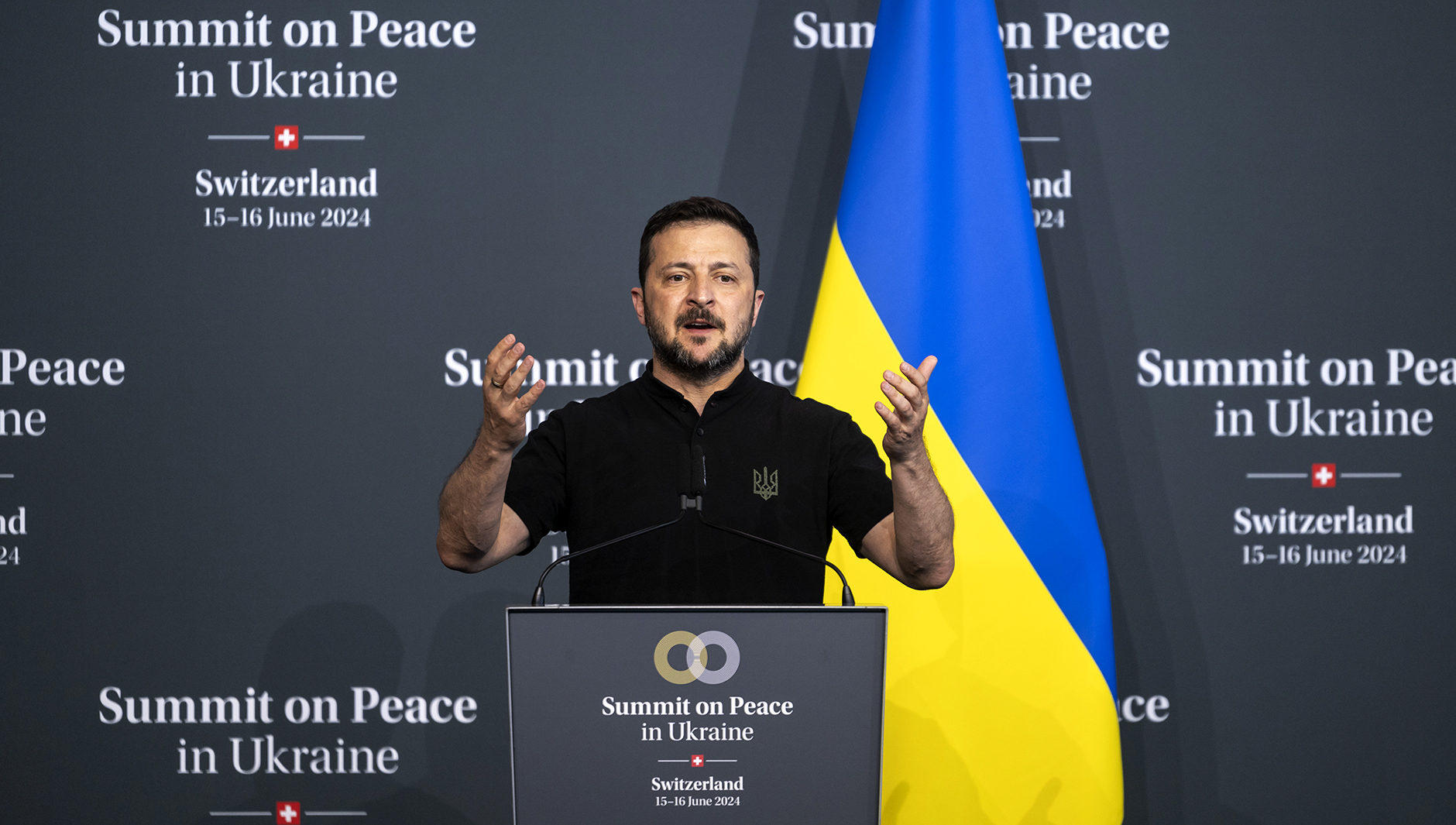
"contents": "<span style=\"font-weight: 400;\">Speaking in the German Bundestag last month, Ukrainian President </span><span style=\"font-weight: 400;\">Volodymyr </span><span style=\"font-weight: 400;\">Zelensky said Kyiv would end the war on its “</span><a href=\"https://www.dw.com/en/ukraine-zelenskyy-says-kyiv-will-end-war-on-own-terms/live-69326832#:~:text=11%20hours%20ago-,'The%20time%20for%20compromise%20is%20over%2C',Zelenskyy%20says%20in%20Bundestag%20speech&text=Ukrainian%20President%20Volodymyr%20Zelenskyy%20told,held%20responsible%2C%22%20he%20said.\"><span style=\"font-weight: 400;\">own terms</span></a><span style=\"font-weight: 400;\">”.</span>\r\n\r\n<span style=\"font-weight: 400;\">In this light, and given the Kremlin’s doubling down on </span><a href=\"https://apnews.com/article/russia-ukraine-war-putin-e7102a4f4bedd9aef8a855a7aa977f9f\"><span style=\"font-weight: 400;\">its war effort</span></a><span style=\"font-weight: 400;\">, is there any role for external mediators in helping to create the terms by which the war can end? Given the reluctance, so far, for outsiders to provide offensive weaponry of the sort that can expel the Russian forces from Ukraine, is the role of outsiders only to provide arms to ensure that Ukraine is not defeated, and that parity might create the conditions for peace? </span>\r\n\r\n<span style=\"font-weight: 400;\">For all of the well-meaning political statements in support of Ukraine, the depth of understanding of the strategic challenge and thus commitment required is breathtakingly scant.</span>\r\n\r\n<span style=\"font-weight: 400;\">There is an X (formerly Twitter) account dedicated to </span><a href=\"https://twitter.com/iseuconcerned?lang=en\"><span style=\"font-weight: 400;\">parodying EU statements</span></a><span style=\"font-weight: 400;\"> which rely on platitudinous diplomatic nonsenses of the likes of “</span><span style=\"font-weight: 400;\">very, deeply, strongly, seriously, gravely, extremely, unprecedentedly” in the use of language</span><span style=\"font-weight: 400;\">.</span>\r\n\r\n<p><img loading=\"lazy\" class=\"size-full wp-image-2258178\" src=\"https://www.dailymaverick.co.za/wp-content/uploads/2024/07/12335834.jpg\" alt=\"russia ukraine conflict resolution\" width=\"1842\" height=\"1091\" /> <em>Ukrainian officials inspect a shell crater at the site of shelling in Vilniansk, Zaporizhzhia region, southeastern Ukraine, 29 June 2024. (Photo: EPA-EFE / Kateryna Klochko)</em></p>\r\n\r\n<span style=\"font-weight: 400;\">The G7 </span><a href=\"https://www.state.gov/g7-italy-2024-foreign-ministers-statement-on-addressing-global-challenges-fostering-partnerships/\"><span style=\"font-weight: 400;\">foreign ministers’ statement</span></a><span style=\"font-weight: 400;\"> from their April Italian summit is a case in point, containing 13 expressions of just how “concerned” the group — representing</span> <span style=\"font-weight: 400;\">Canada, France, Germany, Italy, Japan, the UK and the US along with the high representative of the European Union — was about the state of international relations, including the three times that they were “deeply concerned”. There were 19 uses of “condemn” (strongly or otherwise), and two citations of “unprecedented”. To round things off, seven times the ministers “demanded” and no fewer than 23 times “called on” various actors to do stuff. If nothing else, such statements are evidence of diplomatic impotence.</span>\r\n\r\n<span style=\"font-weight: 400;\">In the case of Ukraine, amid the largest conventional combat engagement on European soil since World War 2, such hand-wringing is of no value unless it is accompanied by strong military support. </span>\r\n\r\n<span style=\"font-weight: 400;\">Conflicts usually end when one side wins outright (as in 1945) or there is a stalemate and no victory is likely without great and unacceptable costs.</span>\r\n\r\n<span style=\"font-weight: 400;\">Given the reluctance, so far, for outsiders to provide offensive weaponry of the sort that can expel the Russian forces, along with Ukraine’s demographic and economic disadvantage compared with Russia, it is difficult to imagine an outright victory — perhaps only through the internal collapse of Russia itself or the removal of its leadership.</span>\r\n\r\n<span style=\"font-weight: 400;\">And yet for Ukraine, it is difficult to see where mediated compromise could occur. Would it ever be acceptable to lose land in exchange for peace? If this were so, could the Russians be trusted to stick to their word in any agreement reached, not only given President Vladimir Putin’s stated preference but the failure, too, of multiple prior peace attempts? </span>\r\n<h4><b>More aid is not necessarily better</b></h4>\r\n<span style=\"font-weight: 400;\">There may be lessons from Africa which suggest that the success of the role of outsiders depends, paradoxically, on the extent of local ownership. </span>\r\n\r\n<span style=\"font-weight: 400;\">In the Horn of Africa alone, the cost in human lives from conflict has topped at least one million since 2020. At least 150,000 troops were killed in the two-year war in Tigray which began in 2020, along with perhaps as many as 600,000 civilians.</span>\r\n\r\n<span style=\"font-weight: 400;\">Since then, conflicts elsewhere in the region, such as in the Amhara and Oromia regions of Ethiopia and in Sudan and South Sudan, have added to the grim tally. In Sudan, the casualties from the fighting between the Rapid Support Forces and the Sudanese Armed Forces now total perhaps 50,000</span><span style=\"font-weight: 400;\">.</span>\r\n\r\n<span style=\"font-weight: 400;\">Yet this is most likely a radical undercount since more than 6.5 million people are known to have been internally displaced, with more than two million external refugees. This excludes the cost of the widespread violence which reignited in Darfur province following the 2023 Masalit massacres.</span><span style=\"font-weight: 400;\"> </span>\r\n\r\n<span style=\"font-weight: 400;\">Fighting between various factions in South Sudan cost an estimated 400,000 lives between 2012-18, following the war of independence from Sudan in which 1.9 million were killed.</span>\r\n\r\n<span style=\"font-weight: 400;\">To these numbers could be added the instability in Somaliland and Somalia, where more than 70,000 have died this century.</span>\r\n\r\n<span style=\"font-weight: 400;\">If we add the casualties in Oromia (between 200,000 and 300,000) and the Amhara region into the picture, the regional figure since 2020 certainly tops one million, perhaps 1.5 million. In these parts, genocide unfolds every day, but, curiously, does not cause outrage.</span>\r\n\r\n<span style=\"font-weight: 400;\">One problem is not a lack of money, but perhaps rather too much.</span>\r\n\r\n<span style=\"font-weight: 400;\">Be</span><span style=\"font-weight: 400;\">tween 2007 and 2020, for example, the US spent </span><a href=\"https://watson.brown.edu/costsofwar/files/cow/imce/papers/2023/Soyemi_Costs%20of%20War_CTSomalia.pdf\"><span style=\"font-weight: 400;\">at least $2.5-billion</span></a><span style=\"font-weight: 400;\"> on counter-terrorism operations in Somalia, excluding Department of Defense and CIA spending. </span><span style=\"font-weight: 400;\">Reported official development assistance for Somalia has totalled just under $2-billion annually over the past 10 years, creating a very high aid-to-GDP ratio of around one-quarter.</span>\r\n\r\n<span style=\"font-weight: 400;\">Looking at the comparative results of aid in the comparatively stable and democratic breakaway province of Somaliland (about $20-million a year), one would have to say that too little aid may not be the problem. Indeed, the results of the failure of the international mission in Afghanistan in which $2.3-trillion was spent by the US alone — a thousand times more than spending on Somalia — also suggest the same answer. More is not necessarily better.</span>\r\n<h4><b>Post-WW2 order outdated</b></h4>\r\n<span style=\"font-weight: 400;\">The failure to routinely convert war into peace through mediation and negotiation and the manner in which disputes seem to invariably progress to full-blown conflict suggests that the problem lies elsewhere, a topic that was the focus of the Lamu Dialogue held recently in Kenya.</span>\r\n\r\n<span style=\"font-weight: 400;\">In a world that increasingly resembles that of the 1930s, where the value of the then pre-eminent international organisation (the League of Nations) had foundered at that time on the Italian invasion of Abyssinia, this is not surprising. Today the post-World War 2 order no longer appears fit for purpose and certainly is no longer what it once was. </span>\r\n\r\n<span style=\"font-weight: 400;\">This failure both reflects and is compounded by the inability to positively manage external spoilers. The Cold War offered wiggle room to African dictators, from Mengistu in Ethiopia to Mobutu in Zaire. Now, in a far cry from the simplicity of the brief single-superpower era of the 1990s, the growing role of Russia, the UAE, Qatar, Turkey, Iran and China among others creates a welter of options for African leaders seeking to sidestep international pressure. </span>\r\n\r\n<span style=\"font-weight: 400;\">Speaking truth to power is necessary but largely absent, amplifying such weaknesses in an environment where a plethora of processes and forums can undermine the focus required for success. External agencies, too, can help the process along but they can also dilute the imperative for local ownership.</span>\r\n\r\n<span style=\"font-weight: 400;\">Politics is about momentum; a meeting that does not create or add to that momentum is just hot air.</span>\r\n<h4><b>Local actors, international leverage</b></h4>\r\n<span style=\"font-weight: 400;\">So how to enhance practices of conflict mediation?</span>\r\n\r\n<span style=\"font-weight: 400;\">One lesson from South Africa is that, in the words of the late former president FW de Klerk, there was a recognition that the then ruling party had to “liquidate” the existing government structures in the country. The National Party accepted that the process was irreversible and that, as Roelf Meyer, who led negotiations on behalf of the SA government, put it at Lamu, “There was no turning back once Mandela was released — we couldn’t put him back in prison.”</span>\r\n\r\n<span style=\"font-weight: 400;\">That this was recognised and the window of opportunity identified by leadership on both sides helped to engender trust and pushed the process forward.</span>\r\n\r\n<span style=\"font-weight: 400;\">Personal relationships were crucial, too, in ending the Tigray War in 2022, where a small 1+1 delegation of the conflicting parties hammered out all the sticking points in a Pretoria hotel room under the watchful eye of Kenyan President Uhuru Kenyatta who, like De Klerk, understood and “seized the moment”, as one member of his team put it.</span>\r\n\r\n<span style=\"font-weight: 400;\">In this way, reminds Meyer, the transition was “fundamentally local and centred on relationships and individuals”. While there were occasional “key visitors” including the US and British ambassadors of the time, “We were our own mediators. We had to look each other in the eye, find solutions, and look to the long term.” This was enabled at its core by the acknowledgement by De Klerk, says Meyer, that he was doing himself out of power. </span>\r\n\r\n<span style=\"font-weight: 400;\">A different lesson from the success of the 1995 Dayton Peace Agreement on the former Yugoslavia is that the incentives were made clear by the composition of the external guarantors. At Dayton, the IMF and World Bank were part of the agreement and thus incentivised the solution. Such guarantors were not, for instance, part of the Pretoria Agreement bringing about an end to the Tigray War in 2022.</span>\r\n\r\n<span style=\"font-weight: 400;\">External actors have to be willing to create and use leverage, and should not shy away from doing so. Escalation can create dividends, whether military or economic. Signalling a willingness to do so can also help to dispel the bluff of politicians in trying to take these options off the table, as Putin regularly attempts with the threat of nuclear escalation or of taking a widening war into Nato territory.</span>\r\n\r\n<span style=\"font-weight: 400;\">As Meyer observes, it was not the attempts to make South Africa ungovernable which drove a settlement. “More than anything, international pressure brought about the change, in particular the US Comprehensive Anti-Apartheid Act,” he says. “Whites overwhelmingly realised that apartheid was indefensible.”</span>\r\n\r\n<span style=\"font-weight: 400;\">And there has to be an awareness of timing. One of the key lessons from Afghanistan is that the victors in 2002 led by the US failed to use their superiority to make peace with a defeated Taliban. A better time to do this would never arise and the Taliban weathered the storm for 20 years to make a political comeback on its terms. </span>\r\n\r\n<span style=\"font-weight: 400;\">Mediation works when all protagonists see the advantage in peace (which is not the case for now with Russia), the international community is uniformly pushing them to the table (which is not the case in the war in Ukraine), and there is a clear peace methodology, leadership and, as above, the right timing. While Zelensky has proposed a 10-point peace plan, this is not being advocated or even supported by all, and certainly not the Russian axis.</span>\r\n\r\n<span style=\"font-weight: 400;\">While </span><a href=\"https://www.kyivpost.com/videos/30918\"><span style=\"font-weight: 400;\">the fear of escalation</span></a><span style=\"font-weight: 400;\"> is used to limit the West’s options, the West should not kid itself: it is already at war with Russia.</span>\r\n\r\n<span style=\"font-weight: 400;\">All this would suggest that the only avenue currently open for peace in Ukraine is, unfortunately, war. </span><b>DM</b>\r\n\r\n<i><span style=\"font-weight: 400;\">Dr Mills is the co-author of the forthcoming </span></i><a href=\"https://www.penguinrandomhouse.co.za/\"><span style=\"font-weight: 400;\">The Art of War and Peace</span></a> <i><span style=\"font-weight: 400;\">(Penguin Random House) and, with Hartley, is at </span></i><a href=\"https://www.thebrenthurstfoundation.org/\"><i><span style=\"font-weight: 400;\">The Brenthurst Foundation</span></i></a><i><span style=\"font-weight: 400;\">.</span></i>\r\n\r\n<span style=\"font-weight: 400;\">Daily Maverick’s</span><i><span style=\"font-weight: 400;\"> journalism is funded by the contributions of our Maverick Insider members. If you appreciate our work, then join our membership community. Defending Democracy is an everyday effort. Be part of it.</span></i><a href=\"https://www.dailymaverick.co.za/insider/?utm_source=dm_website&utm_medium=article&utm_campaign=cabinet_announcement\"> <i><span style=\"font-weight: 400;\">Become a Maverick Insider</span></i></a><i><span style=\"font-weight: 400;\">.</span></i>",
"teaser": "Russia and Ukraine — the echo chamber of conflict resolution",
"externalUrl": "",
"sponsor": null,
"authors": [
{
"id": "39402",
"name": "Greg Mills and Ray Hartley",
"image": "https://www.dailymaverick.co.za/wp-content/uploads/2024/01/Mills-Hartley-SA-claiming-easy-victories.jpg",
"url": "https://staging.dailymaverick.co.za/author/greg-mills-and-ray-hartley/",
"editorialName": "greg-mills-and-ray-hartley",
"department": "",
"name_latin": ""
}
],
"description": "",
"keywords": [
{
"type": "Keyword",
"data": {
"keywordId": "6021",
"name": "Sudan",
"url": "https://staging.dailymaverick.co.za/keyword/sudan/",
"slug": "sudan",
"description": "",
"articlesCount": 0,
"replacedWith": null,
"display_name": "Sudan",
"translations": null
}
},
{
"type": "Keyword",
"data": {
"keywordId": "6768",
"name": "Mediation",
"url": "https://staging.dailymaverick.co.za/keyword/mediation/",
"slug": "mediation",
"description": "",
"articlesCount": 0,
"replacedWith": null,
"display_name": "Mediation",
"translations": null
}
},
{
"type": "Keyword",
"data": {
"keywordId": "6924",
"name": "Uhuru Kenyatta",
"url": "https://staging.dailymaverick.co.za/keyword/uhuru-kenyatta/",
"slug": "uhuru-kenyatta",
"description": "",
"articlesCount": 0,
"replacedWith": null,
"display_name": "Uhuru Kenyatta",
"translations": null
}
},
{
"type": "Keyword",
"data": {
"keywordId": "11560",
"name": "Greg Mills",
"url": "https://staging.dailymaverick.co.za/keyword/greg-mills/",
"slug": "greg-mills",
"description": "",
"articlesCount": 0,
"replacedWith": null,
"display_name": "Greg Mills",
"translations": null
}
},
{
"type": "Keyword",
"data": {
"keywordId": "12331",
"name": "Ukraine",
"url": "https://staging.dailymaverick.co.za/keyword/ukraine/",
"slug": "ukraine",
"description": "",
"articlesCount": 0,
"replacedWith": null,
"display_name": "Ukraine",
"translations": null
}
},
{
"type": "Keyword",
"data": {
"keywordId": "15614",
"name": "Roelf Meyer",
"url": "https://staging.dailymaverick.co.za/keyword/roelf-meyer/",
"slug": "roelf-meyer",
"description": "",
"articlesCount": 0,
"replacedWith": null,
"display_name": "Roelf Meyer",
"translations": null
}
},
{
"type": "Keyword",
"data": {
"keywordId": "19287",
"name": "Conflict resolution",
"url": "https://staging.dailymaverick.co.za/keyword/conflict-resolution/",
"slug": "conflict-resolution",
"description": "",
"articlesCount": 0,
"replacedWith": null,
"display_name": "Conflict resolution",
"translations": null
}
},
{
"type": "Keyword",
"data": {
"keywordId": "185325",
"name": "Volodymyr Zelensky",
"url": "https://staging.dailymaverick.co.za/keyword/volodymyr-zelensky/",
"slug": "volodymyr-zelensky",
"description": "",
"articlesCount": 0,
"replacedWith": null,
"display_name": "Volodymyr Zelensky",
"translations": null
}
},
{
"type": "Keyword",
"data": {
"keywordId": "388995",
"name": "Ray Hartley",
"url": "https://staging.dailymaverick.co.za/keyword/ray-hartley/",
"slug": "ray-hartley",
"description": "",
"articlesCount": 0,
"replacedWith": null,
"display_name": "Ray Hartley",
"translations": null
}
},
{
"type": "Keyword",
"data": {
"keywordId": "420632",
"name": "Tigray War",
"url": "https://staging.dailymaverick.co.za/keyword/tigray-war/",
"slug": "tigray-war",
"description": "",
"articlesCount": 0,
"replacedWith": null,
"display_name": "Tigray War",
"translations": null
}
}
],
"short_summary": null,
"source": null,
"related": [],
"options": [],
"attachments": [
{
"id": "91519",
"name": "Ukrainian officials inspect a shell crater at the site of shelling in Vilniansk, Zaporizhzhia region, southeastern Ukraine, 29 June 2024. (Photo: EPA-EFE / Kateryna Klochko)",
"description": "<span style=\"font-weight: 400;\">Speaking in the German Bundestag last month, Ukrainian President </span><span style=\"font-weight: 400;\">Volodymyr </span><span style=\"font-weight: 400;\">Zelensky said Kyiv would end the war on its “</span><a href=\"https://www.dw.com/en/ukraine-zelenskyy-says-kyiv-will-end-war-on-own-terms/live-69326832#:~:text=11%20hours%20ago-,'The%20time%20for%20compromise%20is%20over%2C',Zelenskyy%20says%20in%20Bundestag%20speech&text=Ukrainian%20President%20Volodymyr%20Zelenskyy%20told,held%20responsible%2C%22%20he%20said.\"><span style=\"font-weight: 400;\">own terms</span></a><span style=\"font-weight: 400;\">”.</span>\r\n\r\n<span style=\"font-weight: 400;\">In this light, and given the Kremlin’s doubling down on </span><a href=\"https://apnews.com/article/russia-ukraine-war-putin-e7102a4f4bedd9aef8a855a7aa977f9f\"><span style=\"font-weight: 400;\">its war effort</span></a><span style=\"font-weight: 400;\">, is there any role for external mediators in helping to create the terms by which the war can end? Given the reluctance, so far, for outsiders to provide offensive weaponry of the sort that can expel the Russian forces from Ukraine, is the role of outsiders only to provide arms to ensure that Ukraine is not defeated, and that parity might create the conditions for peace? </span>\r\n\r\n<span style=\"font-weight: 400;\">For all of the well-meaning political statements in support of Ukraine, the depth of understanding of the strategic challenge and thus commitment required is breathtakingly scant.</span>\r\n\r\n<span style=\"font-weight: 400;\">There is an X (formerly Twitter) account dedicated to </span><a href=\"https://twitter.com/iseuconcerned?lang=en\"><span style=\"font-weight: 400;\">parodying EU statements</span></a><span style=\"font-weight: 400;\"> which rely on platitudinous diplomatic nonsenses of the likes of “</span><span style=\"font-weight: 400;\">very, deeply, strongly, seriously, gravely, extremely, unprecedentedly” in the use of language</span><span style=\"font-weight: 400;\">.</span>\r\n\r\n[caption id=\"attachment_2258178\" align=\"alignnone\" width=\"1842\"]<img class=\"size-full wp-image-2258178\" src=\"https://www.dailymaverick.co.za/wp-content/uploads/2024/07/12335834.jpg\" alt=\"russia ukraine conflict resolution\" width=\"1842\" height=\"1091\" /> <em>Ukrainian officials inspect a shell crater at the site of shelling in Vilniansk, Zaporizhzhia region, southeastern Ukraine, 29 June 2024. (Photo: EPA-EFE / Kateryna Klochko)</em>[/caption]\r\n\r\n<span style=\"font-weight: 400;\">The G7 </span><a href=\"https://www.state.gov/g7-italy-2024-foreign-ministers-statement-on-addressing-global-challenges-fostering-partnerships/\"><span style=\"font-weight: 400;\">foreign ministers’ statement</span></a><span style=\"font-weight: 400;\"> from their April Italian summit is a case in point, containing 13 expressions of just how “concerned” the group — representing</span> <span style=\"font-weight: 400;\">Canada, France, Germany, Italy, Japan, the UK and the US along with the high representative of the European Union — was about the state of international relations, including the three times that they were “deeply concerned”. There were 19 uses of “condemn” (strongly or otherwise), and two citations of “unprecedented”. To round things off, seven times the ministers “demanded” and no fewer than 23 times “called on” various actors to do stuff. If nothing else, such statements are evidence of diplomatic impotence.</span>\r\n\r\n<span style=\"font-weight: 400;\">In the case of Ukraine, amid the largest conventional combat engagement on European soil since World War 2, such hand-wringing is of no value unless it is accompanied by strong military support. </span>\r\n\r\n<span style=\"font-weight: 400;\">Conflicts usually end when one side wins outright (as in 1945) or there is a stalemate and no victory is likely without great and unacceptable costs.</span>\r\n\r\n<span style=\"font-weight: 400;\">Given the reluctance, so far, for outsiders to provide offensive weaponry of the sort that can expel the Russian forces, along with Ukraine’s demographic and economic disadvantage compared with Russia, it is difficult to imagine an outright victory — perhaps only through the internal collapse of Russia itself or the removal of its leadership.</span>\r\n\r\n<span style=\"font-weight: 400;\">And yet for Ukraine, it is difficult to see where mediated compromise could occur. Would it ever be acceptable to lose land in exchange for peace? If this were so, could the Russians be trusted to stick to their word in any agreement reached, not only given President Vladimir Putin’s stated preference but the failure, too, of multiple prior peace attempts? </span>\r\n<h4><b>More aid is not necessarily better</b></h4>\r\n<span style=\"font-weight: 400;\">There may be lessons from Africa which suggest that the success of the role of outsiders depends, paradoxically, on the extent of local ownership. </span>\r\n\r\n<span style=\"font-weight: 400;\">In the Horn of Africa alone, the cost in human lives from conflict has topped at least one million since 2020. At least 150,000 troops were killed in the two-year war in Tigray which began in 2020, along with perhaps as many as 600,000 civilians.</span>\r\n\r\n<span style=\"font-weight: 400;\">Since then, conflicts elsewhere in the region, such as in the Amhara and Oromia regions of Ethiopia and in Sudan and South Sudan, have added to the grim tally. In Sudan, the casualties from the fighting between the Rapid Support Forces and the Sudanese Armed Forces now total perhaps 50,000</span><span style=\"font-weight: 400;\">.</span>\r\n\r\n<span style=\"font-weight: 400;\">Yet this is most likely a radical undercount since more than 6.5 million people are known to have been internally displaced, with more than two million external refugees. This excludes the cost of the widespread violence which reignited in Darfur province following the 2023 Masalit massacres.</span><span style=\"font-weight: 400;\"> </span>\r\n\r\n<span style=\"font-weight: 400;\">Fighting between various factions in South Sudan cost an estimated 400,000 lives between 2012-18, following the war of independence from Sudan in which 1.9 million were killed.</span>\r\n\r\n<span style=\"font-weight: 400;\">To these numbers could be added the instability in Somaliland and Somalia, where more than 70,000 have died this century.</span>\r\n\r\n<span style=\"font-weight: 400;\">If we add the casualties in Oromia (between 200,000 and 300,000) and the Amhara region into the picture, the regional figure since 2020 certainly tops one million, perhaps 1.5 million. In these parts, genocide unfolds every day, but, curiously, does not cause outrage.</span>\r\n\r\n<span style=\"font-weight: 400;\">One problem is not a lack of money, but perhaps rather too much.</span>\r\n\r\n<span style=\"font-weight: 400;\">Be</span><span style=\"font-weight: 400;\">tween 2007 and 2020, for example, the US spent </span><a href=\"https://watson.brown.edu/costsofwar/files/cow/imce/papers/2023/Soyemi_Costs%20of%20War_CTSomalia.pdf\"><span style=\"font-weight: 400;\">at least $2.5-billion</span></a><span style=\"font-weight: 400;\"> on counter-terrorism operations in Somalia, excluding Department of Defense and CIA spending. </span><span style=\"font-weight: 400;\">Reported official development assistance for Somalia has totalled just under $2-billion annually over the past 10 years, creating a very high aid-to-GDP ratio of around one-quarter.</span>\r\n\r\n<span style=\"font-weight: 400;\">Looking at the comparative results of aid in the comparatively stable and democratic breakaway province of Somaliland (about $20-million a year), one would have to say that too little aid may not be the problem. Indeed, the results of the failure of the international mission in Afghanistan in which $2.3-trillion was spent by the US alone — a thousand times more than spending on Somalia — also suggest the same answer. More is not necessarily better.</span>\r\n<h4><b>Post-WW2 order outdated</b></h4>\r\n<span style=\"font-weight: 400;\">The failure to routinely convert war into peace through mediation and negotiation and the manner in which disputes seem to invariably progress to full-blown conflict suggests that the problem lies elsewhere, a topic that was the focus of the Lamu Dialogue held recently in Kenya.</span>\r\n\r\n<span style=\"font-weight: 400;\">In a world that increasingly resembles that of the 1930s, where the value of the then pre-eminent international organisation (the League of Nations) had foundered at that time on the Italian invasion of Abyssinia, this is not surprising. Today the post-World War 2 order no longer appears fit for purpose and certainly is no longer what it once was. </span>\r\n\r\n<span style=\"font-weight: 400;\">This failure both reflects and is compounded by the inability to positively manage external spoilers. The Cold War offered wiggle room to African dictators, from Mengistu in Ethiopia to Mobutu in Zaire. Now, in a far cry from the simplicity of the brief single-superpower era of the 1990s, the growing role of Russia, the UAE, Qatar, Turkey, Iran and China among others creates a welter of options for African leaders seeking to sidestep international pressure. </span>\r\n\r\n<span style=\"font-weight: 400;\">Speaking truth to power is necessary but largely absent, amplifying such weaknesses in an environment where a plethora of processes and forums can undermine the focus required for success. External agencies, too, can help the process along but they can also dilute the imperative for local ownership.</span>\r\n\r\n<span style=\"font-weight: 400;\">Politics is about momentum; a meeting that does not create or add to that momentum is just hot air.</span>\r\n<h4><b>Local actors, international leverage</b></h4>\r\n<span style=\"font-weight: 400;\">So how to enhance practices of conflict mediation?</span>\r\n\r\n<span style=\"font-weight: 400;\">One lesson from South Africa is that, in the words of the late former president FW de Klerk, there was a recognition that the then ruling party had to “liquidate” the existing government structures in the country. The National Party accepted that the process was irreversible and that, as Roelf Meyer, who led negotiations on behalf of the SA government, put it at Lamu, “There was no turning back once Mandela was released — we couldn’t put him back in prison.”</span>\r\n\r\n<span style=\"font-weight: 400;\">That this was recognised and the window of opportunity identified by leadership on both sides helped to engender trust and pushed the process forward.</span>\r\n\r\n<span style=\"font-weight: 400;\">Personal relationships were crucial, too, in ending the Tigray War in 2022, where a small 1+1 delegation of the conflicting parties hammered out all the sticking points in a Pretoria hotel room under the watchful eye of Kenyan President Uhuru Kenyatta who, like De Klerk, understood and “seized the moment”, as one member of his team put it.</span>\r\n\r\n<span style=\"font-weight: 400;\">In this way, reminds Meyer, the transition was “fundamentally local and centred on relationships and individuals”. While there were occasional “key visitors” including the US and British ambassadors of the time, “We were our own mediators. We had to look each other in the eye, find solutions, and look to the long term.” This was enabled at its core by the acknowledgement by De Klerk, says Meyer, that he was doing himself out of power. </span>\r\n\r\n<span style=\"font-weight: 400;\">A different lesson from the success of the 1995 Dayton Peace Agreement on the former Yugoslavia is that the incentives were made clear by the composition of the external guarantors. At Dayton, the IMF and World Bank were part of the agreement and thus incentivised the solution. Such guarantors were not, for instance, part of the Pretoria Agreement bringing about an end to the Tigray War in 2022.</span>\r\n\r\n<span style=\"font-weight: 400;\">External actors have to be willing to create and use leverage, and should not shy away from doing so. Escalation can create dividends, whether military or economic. Signalling a willingness to do so can also help to dispel the bluff of politicians in trying to take these options off the table, as Putin regularly attempts with the threat of nuclear escalation or of taking a widening war into Nato territory.</span>\r\n\r\n<span style=\"font-weight: 400;\">As Meyer observes, it was not the attempts to make South Africa ungovernable which drove a settlement. “More than anything, international pressure brought about the change, in particular the US Comprehensive Anti-Apartheid Act,” he says. “Whites overwhelmingly realised that apartheid was indefensible.”</span>\r\n\r\n<span style=\"font-weight: 400;\">And there has to be an awareness of timing. One of the key lessons from Afghanistan is that the victors in 2002 led by the US failed to use their superiority to make peace with a defeated Taliban. A better time to do this would never arise and the Taliban weathered the storm for 20 years to make a political comeback on its terms. </span>\r\n\r\n<span style=\"font-weight: 400;\">Mediation works when all protagonists see the advantage in peace (which is not the case for now with Russia), the international community is uniformly pushing them to the table (which is not the case in the war in Ukraine), and there is a clear peace methodology, leadership and, as above, the right timing. While Zelensky has proposed a 10-point peace plan, this is not being advocated or even supported by all, and certainly not the Russian axis.</span>\r\n\r\n<span style=\"font-weight: 400;\">While </span><a href=\"https://www.kyivpost.com/videos/30918\"><span style=\"font-weight: 400;\">the fear of escalation</span></a><span style=\"font-weight: 400;\"> is used to limit the West’s options, the West should not kid itself: it is already at war with Russia.</span>\r\n\r\n<span style=\"font-weight: 400;\">All this would suggest that the only avenue currently open for peace in Ukraine is, unfortunately, war. </span><b>DM</b>\r\n\r\n<i><span style=\"font-weight: 400;\">Dr Mills is the co-author of the forthcoming </span></i><a href=\"https://www.penguinrandomhouse.co.za/\"><span style=\"font-weight: 400;\">The Art of War and Peace</span></a> <i><span style=\"font-weight: 400;\">(Penguin Random House) and, with Hartley, is at </span></i><a href=\"https://www.thebrenthurstfoundation.org/\"><i><span style=\"font-weight: 400;\">The Brenthurst Foundation</span></i></a><i><span style=\"font-weight: 400;\">.</span></i>\r\n\r\n<span style=\"font-weight: 400;\">Daily Maverick’s</span><i><span style=\"font-weight: 400;\"> journalism is funded by the contributions of our Maverick Insider members. If you appreciate our work, then join our membership community. Defending Democracy is an everyday effort. Be part of it.</span></i><a href=\"https://www.dailymaverick.co.za/insider/?utm_source=dm_website&utm_medium=article&utm_campaign=cabinet_announcement\"> <i><span style=\"font-weight: 400;\">Become a Maverick Insider</span></i></a><i><span style=\"font-weight: 400;\">.</span></i>",
"focal": "50% 50%",
"width": 0,
"height": 0,
"url": "https://dmcdn.whitebeard.net/dailymaverick/wp-content/uploads/2024/07/12303342.jpg",
"transforms": [
{
"x": "200",
"y": "100",
"url": "https://dmcdn.whitebeard.net/i/FHgW4-59Rf9wliaTzZ43SnE0H5s=/200x100/smart/filters:strip_exif()/file/dailymaverick/wp-content/uploads/2024/07/12303342.jpg"
},
{
"x": "450",
"y": "0",
"url": "https://dmcdn.whitebeard.net/i/cXckx81tjR6qTY2DjUdqs7_rRm8=/450x0/smart/file/dailymaverick/wp-content/uploads/2024/07/12303342.jpg"
},
{
"x": "800",
"y": "0",
"url": "https://dmcdn.whitebeard.net/i/hPfbxEY-xWXQTBCYrlcy0r-Lc28=/800x0/smart/filters:strip_exif()/file/dailymaverick/wp-content/uploads/2024/07/12303342.jpg"
},
{
"x": "1200",
"y": "0",
"url": "https://dmcdn.whitebeard.net/i/jY74g83z3MNq_NeKZobdrxPgaME=/1200x0/smart/filters:strip_exif()/file/dailymaverick/wp-content/uploads/2024/07/12303342.jpg"
},
{
"x": "1600",
"y": "0",
"url": "https://dmcdn.whitebeard.net/i/OxUSysQMa8Eh25CUIvxTCMgE-8s=/1600x0/smart/filters:strip_exif()/file/dailymaverick/wp-content/uploads/2024/07/12303342.jpg"
}
],
"url_thumbnail": "https://dmcdn.whitebeard.net/i/FHgW4-59Rf9wliaTzZ43SnE0H5s=/200x100/smart/filters:strip_exif()/file/dailymaverick/wp-content/uploads/2024/07/12303342.jpg",
"url_medium": "https://dmcdn.whitebeard.net/i/cXckx81tjR6qTY2DjUdqs7_rRm8=/450x0/smart/file/dailymaverick/wp-content/uploads/2024/07/12303342.jpg",
"url_large": "https://dmcdn.whitebeard.net/i/hPfbxEY-xWXQTBCYrlcy0r-Lc28=/800x0/smart/filters:strip_exif()/file/dailymaverick/wp-content/uploads/2024/07/12303342.jpg",
"url_xl": "https://dmcdn.whitebeard.net/i/jY74g83z3MNq_NeKZobdrxPgaME=/1200x0/smart/filters:strip_exif()/file/dailymaverick/wp-content/uploads/2024/07/12303342.jpg",
"url_xxl": "https://dmcdn.whitebeard.net/i/OxUSysQMa8Eh25CUIvxTCMgE-8s=/1600x0/smart/filters:strip_exif()/file/dailymaverick/wp-content/uploads/2024/07/12303342.jpg",
"type": "image"
}
],
"summary": "Mediation works when all protagonists see the advantage in peace, the international community is uniformly pushing them to the table, and there is a clear peace methodology, leadership and the right timing. Such conditions don’t exist in Russia’s war on Ukraine.",
"template_type": null,
"dm_custom_section_label": null,
"elements": [],
"seo": {
"search_title": "Russia and Ukraine — the echo chamber of conflict resolution",
"search_description": "<span style=\"font-weight: 400;\">Speaking in the German Bundestag last month, Ukrainian President </span><span style=\"font-weight: 400;\">Volodymyr </span><span style=\"font-weight: 400;\">Zelensky said K",
"social_title": "Russia and Ukraine — the echo chamber of conflict resolution",
"social_description": "<span style=\"font-weight: 400;\">Speaking in the German Bundestag last month, Ukrainian President </span><span style=\"font-weight: 400;\">Volodymyr </span><span style=\"font-weight: 400;\">Zelensky said K",
"social_image": ""
},
"cached": true,
"access_allowed": true
}