



All Article Properties:
{
"access_control": false,
"status": "publish",
"objectType": "Article",
"id": "2111882",
"signature": "Article:2111882",
"url": "https://staging.dailymaverick.co.za/article/2024-03-28-urgent-need-to-focus-on-sa-childrens-mental-health-president-of-sa-society-of-psychiatrists/",
"shorturl": "https://staging.dailymaverick.co.za/article/2111882",
"slug": "urgent-need-to-focus-on-sa-childrens-mental-health-president-of-sa-society-of-psychiatrists",
"contentType": {
"id": "1",
"name": "Article",
"slug": "article"
},
"views": 0,
"comments": 1,
"preview_limit": null,
"excludedFromGoogleSearchEngine": 0,
"title": "Urgent need to focus on SA children’s mental health — president of SA Society of Psychiatrists",
"firstPublished": "2024-03-28 11:24:27",
"lastUpdate": "2024-03-28 11:24:27",
"categories": [
{
"id": "29",
"name": "South Africa",
"signature": "Category:29",
"slug": "south-africa",
"typeId": {
"typeId": "1",
"name": "Daily Maverick",
"slug": "",
"includeInIssue": "0",
"shortened_domain": "",
"stylesheetClass": "",
"domain": "staging.dailymaverick.co.za",
"articleUrlPrefix": "",
"access_groups": "[]",
"locale": "",
"preview_limit": null
},
"parentId": null,
"parent": [],
"image": "",
"cover": "",
"logo": "",
"paid": "0",
"objectType": "Category",
"url": "https://staging.dailymaverick.co.za/category/south-africa/",
"cssCode": "",
"template": "default",
"tagline": "",
"link_param": null,
"description": "Daily Maverick is an independent online news publication and weekly print newspaper in South Africa.\r\n\r\nIt is known for breaking some of the defining stories of South Africa in the past decade, including the Marikana Massacre, in which the South African Police Service killed 34 miners in August 2012.\r\n\r\nIt also investigated the Gupta Leaks, which won the 2019 Global Shining Light Award.\r\n\r\nThat investigation was credited with exposing the Indian-born Gupta family and former President Jacob Zuma for their role in the systemic political corruption referred to as state capture.\r\n\r\nIn 2018, co-founder and editor-in-chief Branislav ‘Branko’ Brkic was awarded the country’s prestigious Nat Nakasa Award, recognised for initiating the investigative collaboration after receiving the hard drive that included the email tranche.\r\n\r\nIn 2021, co-founder and CEO Styli Charalambous also received the award.\r\n\r\nDaily Maverick covers the latest political and news developments in South Africa with breaking news updates, analysis, opinions and more.",
"metaDescription": "",
"order": "0",
"pageId": null,
"articlesCount": null,
"allowComments": "1",
"accessType": "freecount",
"status": "1",
"children": [],
"cached": true
},
{
"id": "134172",
"name": "Maverick Citizen",
"signature": "Category:134172",
"slug": "maverick-citizen",
"typeId": {
"typeId": "1",
"name": "Daily Maverick",
"slug": "",
"includeInIssue": "0",
"shortened_domain": "",
"stylesheetClass": "",
"domain": "staging.dailymaverick.co.za",
"articleUrlPrefix": "",
"access_groups": "[]",
"locale": "",
"preview_limit": null
},
"parentId": null,
"parent": [],
"image": "",
"cover": "",
"logo": "",
"paid": "0",
"objectType": "Category",
"url": "https://staging.dailymaverick.co.za/category/maverick-citizen/",
"cssCode": "",
"template": "default",
"tagline": "",
"link_param": null,
"description": "",
"metaDescription": "",
"order": "0",
"pageId": null,
"articlesCount": null,
"allowComments": "1",
"accessType": "freecount",
"status": "1",
"children": [],
"cached": true
},
{
"id": "387188",
"name": "Maverick News",
"signature": "Category:387188",
"slug": "maverick-news",
"typeId": {
"typeId": "1",
"name": "Daily Maverick",
"slug": "",
"includeInIssue": "0",
"shortened_domain": "",
"stylesheetClass": "",
"domain": "staging.dailymaverick.co.za",
"articleUrlPrefix": "",
"access_groups": "[]",
"locale": "",
"preview_limit": null
},
"parentId": null,
"parent": [],
"image": "",
"cover": "",
"logo": "",
"paid": "0",
"objectType": "Category",
"url": "https://staging.dailymaverick.co.za/category/maverick-news/",
"cssCode": "",
"template": "default",
"tagline": "",
"link_param": null,
"description": "",
"metaDescription": "",
"order": "0",
"pageId": null,
"articlesCount": null,
"allowComments": "1",
"accessType": "freecount",
"status": "1",
"children": [],
"cached": true
}
],
"content_length": 9990,
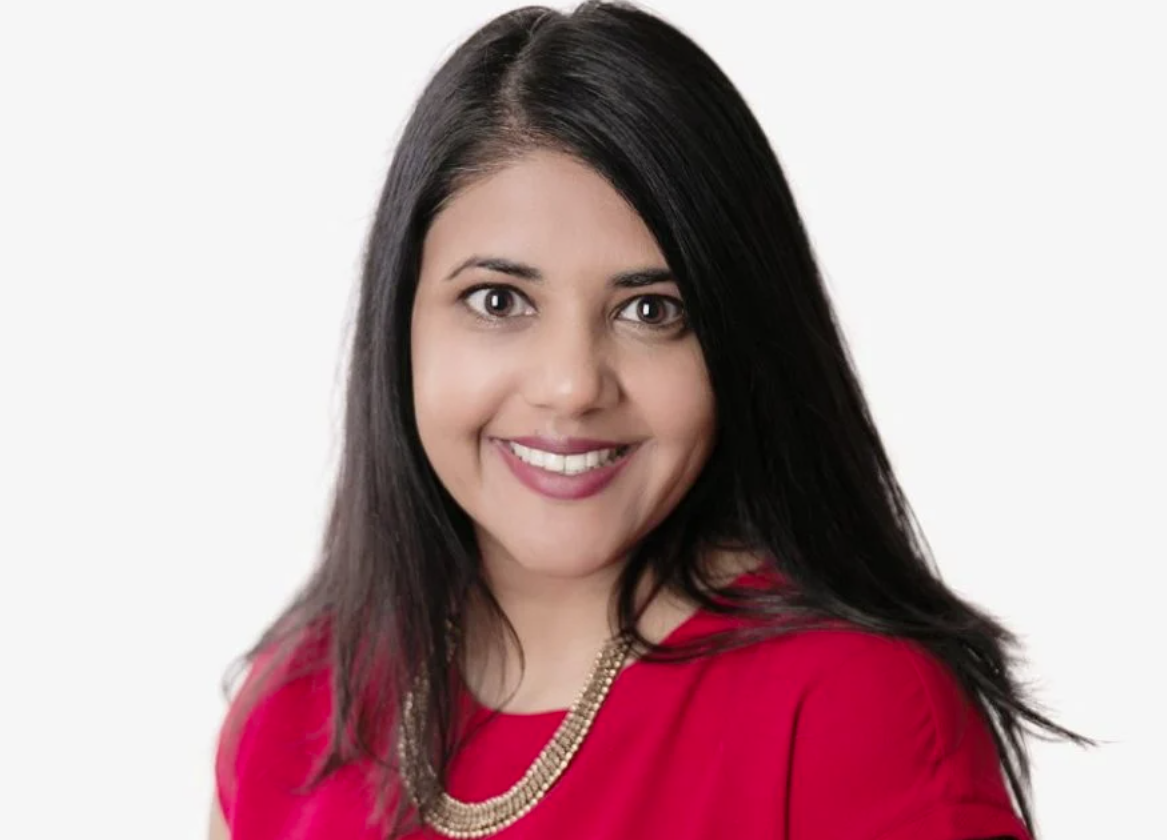
"contents": "“There’s a mental health crisis in South Africa and yet, today, there are fewer than 40 registered child psychiatrists in the country,” Dr Anusha Lachman tells <i>Spotlight</i>.\r\n\r\nShe is the first child psychiatrist to hold the position as president of the SA Society of Psychiatrists (Sasop) and she hopes to prioritise the “grossly under-represented and under-resourced” field of child and adolescent health in the country. While the field is certainly neglected, Lachman is not alone in trying to draw more attention to it — the 2020/2021 edition of the Children’s Institute’s excellent <a href=\"https://ci.uct.ac.za/child-gauge/child-and-adolescent-mental-health\">Child Gauge</a> also concentrated on the mental health of children in South Africa.\r\n<h4><b>Lack of data</b></h4>\r\nOne of the biggest issues in child and adolescent psychiatry, Lachman laments, is the lack of reliable data. She explains that most of the current research, literature and thinking about infant mental health is focused on Western, high-income settings but her focus is on the African context and in limited-resource settings. “We don’t have many figures on how many young people are suffering from the various mental health disorders,” she says.\r\n\r\nWhile it is a struggle to get concrete, reliable statistics, Lachman adds there are some data to work with but South Africa lacks a collective database that ties it all together.\r\n\r\nInsight into the country’s mental health crisis, she says, is partly gauged from the number of referrals to primary health care centres for mental health support and evidenced by the long waiting lists for children to be assessed at specialist mental health clinics and at hospitals. “All we have, across our public hospitals, is the waiting list data which only tell us the duration that children with severe mental illness wait to get into secondary and tertiary level hospitals to access hospital-based care,” she says. The problem is that this type of data tells us little about the vast majority of adolescents with mental health issues who do not require hospitalisation.\r\n\r\n<b>Read more in Daily Maverick:</b> <a href=\"https://www.dailymaverick.co.za/article/2022-07-11-child-and-adolescent-mental-health-services-are-in-crisis-says-report/\">Child and adolescent mental health services are in crisis, says report – this is what the Health Department aims to do about it</a>\r\n\r\nLachman is also head of the Clinical Unit Child Psychiatry at Tygerberg Hospital. The unit is the Western Cape’s only tertiary hospital-based assessment unit for adolescents aged from 13 to 18 years with complex psychiatric presentations and severe mental illness. The young people they help often face not only mental health issues, but the full range of psychosocial challenges — from poverty to exposure to violence, substance abuse, and HIV.\r\n\r\n“We know, for example,” she says, “what substance-use disorder looks like in children under 12, and in young people under 21 because we get that from substance-use centres and rehabilitation centres. We know what proportion of children have HIV and TB and some infectious diseases, which by extension have psychosocial consequences and comorbidities, and we know about neurodevelopmental delays because we track things like school attendance and requests for access to support in special needs.\r\n\r\n“We do have statistics on issues which affect children in South Africa disproportionately,” she says, “on food insecurity, intimate partner violence, instability in terms of accommodation etc. There are huge occurrences of abuse but there are inadequate services for children to be removed from those abusive homes, because we don’t have sufficient children’s homes or safety placements for example. So these are children who are disproportionally disadvantaged and that in itself is hard to quantify — and the psychosocial support structures are just not there.”\r\n\r\nLachman says the Western Cape Department of Health and Wellness is making inroads into the lack of data by tracking and digitising child mental health statistics, through its Child and Adolescent Mental Health Strengthening Project. “This will give us some important data across emergency rooms throughout the Western Cape. Hopefully, that can roll out to the rest of the country so that we can understand what children are presenting with.”\r\n\r\nWhen asked which mental illnesses South African children and adolescents mainly suffer from, Lachman says child mental health is a function of multiple psycho-social stressors, structural problems, and fundamental relational challenges — and that’s hard to categorise.\r\n\r\n“It’s a complex relationship between environmental stressors and vulnerabilities to mental illnesses.” She explains that environments that are high risk — with violence, poverty, untreated mental illness in caregivers, food insecurity and economic burdens — predispose children to mental illness expressed commonly in mood disorders, anxiety and trauma responses. “These take the form of poor functioning at school, learning challenges, suicide and self-harming attempts, drug-seeking behaviours and, in some instances, expressions of severe mental illnesses. ADHD is also commonly seen in this context.”\r\n<h4><b>Lack of relevant research</b></h4>\r\nLachman bemoans what she calls the “distaste” for research that originates from the global South. “The biggest problem we face is the inability to publish and compete in international journals, not because our research is inadequate but because there’s a distrust of information originating from the lower-middle income countries or the global South.”\r\n\r\nIn terms of publication bias, she says the huge issue is that editorial boards and funders of journals consist largely of privileged white men. “They don’t represent people of colour and ethnic majorities outside of the industrialised northern hemisphere countries. When we aren’t able to publish, we aren’t able to get the data out there, and when you don’t get the data out, there’s a vacuum of information and evidence-based treatment — and interventions are often coloured by information that doesn’t represent the lower-income communities and population groups.”\r\n\r\nLachman says <a href=\"https://onlinelibrary.wiley.com/doi/abs/10.1002/imhj.21462\">research published a few years ago</a>, by Stellenbosch University academic Mark Tomlinson, showed that less than 3% of all articles published in peer-reviewed literature include data from low- and middle-income countries, where 90% of children live.\r\n<h4><b>Low number of child psychiatrists</b></h4>\r\nTurning to the shockingly low number of registered child psychiatrists in the country, Lachman notes that in the last three years, South Africa has lost five child psychiatrists to New Zealand. “This is about the brain drain, where there is targeted recruitment of qualified people [by] first-world or industrialised regions who can offer incentivised work opportunities which we, in South Africa, cannot compete with.”\r\n\r\nShe adds: “One child psychiatrist is trained only every two years. And only from a university that can train them. There are only four universities that can do that here — Stellenbosch, Wits, UCT and Pretoria. It depends after two years if the student passes the exam or not so that is why there are so few.” (Prior to training in child psychiatry candidates first have to complete the normal training to become a medical doctor.)\r\n\r\n“So far there were two that qualified in 2022 and one that qualified in 2023. And at the beginning of 2023, we had lost five child psychiatrists to New Zealand and Australia. It’s dire,” she emphasises. People remain registered with the Health Professions Council of South Africa (HPCSA) but that doesn’t mean they are physically in the country, Lachman adds. “Recent stats show that we have under 40 [child] psychiatrists in working environments, including those who have retired.\r\n\r\n“We still sit with provinces that have zero representation for child psychiatry. We recently deployed one to the Eastern Cape, but, currently North West, Limpopo, Mpumalanga, don’t have any qualified [child] psychiatrists.”\r\n<h4><b>‘Everybody’s business’</b></h4>\r\nYet, Lachman does not believe the only answer is to train more child psychiatrists. “The answer is more nuanced. It’s about upskilling and task shifting, and an openness to the idea that child and adolescent psychiatry is everybody’s business.”\r\n\r\n“If you’re an adult psychiatrist, a physician a paediatrician, or a nurse, or even somebody treating adults, it’s your job to be aware of mental health problems in children,” Lachman adds. “I feel strongly about changing the narrative and moving away from the idea that it’s a specialist realm, because mental health is everybody’s business and child mental health should be pervasive in terms of focus, across various sectors.”\r\n\r\nShe also feels strongly that psychiatric services should be offered in ways that are Afro-centric and culturally sensitive. Such an “Afro-centric approach”, she says, “must include a diverse spectrum of input — so not just the mental health care providers who punt a specific model of medication and therapy — but partnerships with the educators, community workers, caregivers and allied health professionals to be able to effectively attempt to support and re-think models that can work in our setting”.\r\n\r\nShe suggests exploring opportunities for children to be screened early, recognised, and offered treatment. For instance, Lachman says, nurses at Well Baby clinics — where babies get immunised — can be trained in child mental health. “Whilst checking the child’s growth and immunisations, they could also look at whether the child is making eye contact, or engaging in reciprocal contact. If this is not happening, they need to know what further questions to ask and what to do next.”\r\n\r\nSimilarly, mental health awareness and screening should be in schools. Why do we offer sexual education, but not address mental health issues, she asks. “Just as we have so easily incorporated into school curriculums how people can get condoms, we need to ask them how they’re feeling, whether they feel isolated, want to harm themselves or want to die.” <b>DM</b>\r\n\r\n<i>*This </i><a href=\"https://www.spotlightnsp.co.za/2024/03/28/dr-anusha-lachman-there-are-fewer-than-40-registered-child-psychiatrists-in-south-africa-says-president-of-sa-society-of-psychiatrists/\"><i>article</i></a><i> was published by </i><a href=\"https://www.spotlightnsp.co.za/\">Spotlight</a><i> – health journalism in the public interest. Sign up to the </i><a href=\"https://www.spotlightnsp.co.za/subscribe-to-our-newsletter/\">Spotlight<i> newsletter</i></a><i>.</i>\r\n\r\n<img loading=\"lazy\" class=\"size-full wp-image-540125 alignnone\" src=\"https://www.dailymaverick.co.za/wp-content/uploads/spotlight.png\" alt=\"Spotlight logo\" width=\"720\" height=\"169\" />",
"teaser": "Urgent need to focus on SA children’s mental health — president of SA Society of Psychiatrists",
"externalUrl": "",
"sponsor": null,
"authors": [
{
"id": "472122",
"name": "Sue Segar",
"image": "",
"url": "https://staging.dailymaverick.co.za/author/sue-segar/",
"editorialName": "sue-segar",
"department": "",
"name_latin": ""
}
],
"description": "",
"keywords": [
{
"type": "Keyword",
"data": {
"keywordId": "8951",
"name": "Mental health",
"url": "https://staging.dailymaverick.co.za/keyword/mental-health/",
"slug": "mental-health",
"description": "",
"articlesCount": 0,
"replacedWith": null,
"display_name": "Mental health",
"translations": null
}
},
{
"type": "Keyword",
"data": {
"keywordId": "8961",
"name": "Psychiatry",
"url": "https://staging.dailymaverick.co.za/keyword/psychiatry/",
"slug": "psychiatry",
"description": "",
"articlesCount": 0,
"replacedWith": null,
"display_name": "Psychiatry",
"translations": null
}
},
{
"type": "Keyword",
"data": {
"keywordId": "22017",
"name": "Spotlight",
"url": "https://staging.dailymaverick.co.za/keyword/spotlight/",
"slug": "spotlight",
"description": "",
"articlesCount": 0,
"replacedWith": null,
"display_name": "Spotlight",
"translations": null
}
},
{
"type": "Keyword",
"data": {
"keywordId": "55766",
"name": "SA Society of Psychiatrists",
"url": "https://staging.dailymaverick.co.za/keyword/sa-society-of-psychiatrists/",
"slug": "sa-society-of-psychiatrists",
"description": "",
"articlesCount": 0,
"replacedWith": null,
"display_name": "SA Society of Psychiatrists",
"translations": null
}
}
],
"short_summary": null,
"source": null,
"related": [],
"options": [],
"attachments": [
{
"id": "52263",
"name": "",
"description": "",
"focal": "50% 50%",
"width": 0,
"height": 0,
"url": "https://dmcdn.whitebeard.net/dailymaverick/wp-content/uploads/2024/03/Dr-Anusha-Lachman.png",
"transforms": [
{
"x": "200",
"y": "100",
"url": "https://dmcdn.whitebeard.net/i/UGveIyPIRodq_J2LYAilMrdQOgk=/200x100/smart/filters:strip_exif()/file/dailymaverick/wp-content/uploads/2024/03/Dr-Anusha-Lachman.png"
},
{
"x": "450",
"y": "0",
"url": "https://dmcdn.whitebeard.net/i/Ms4EPZLCXRWO0_T-uXTsJFDM15Y=/450x0/smart/file/dailymaverick/wp-content/uploads/2024/03/Dr-Anusha-Lachman.png"
},
{
"x": "800",
"y": "0",
"url": "https://dmcdn.whitebeard.net/i/9LImW3AnzL2wwwU9ztwd1XWUIus=/800x0/smart/filters:strip_exif()/file/dailymaverick/wp-content/uploads/2024/03/Dr-Anusha-Lachman.png"
},
{
"x": "1200",
"y": "0",
"url": "https://dmcdn.whitebeard.net/i/TmN8exs_xZiz7lyvgOX_oYm0Qgo=/1200x0/smart/filters:strip_exif()/file/dailymaverick/wp-content/uploads/2024/03/Dr-Anusha-Lachman.png"
},
{
"x": "1600",
"y": "0",
"url": "https://dmcdn.whitebeard.net/i/HRba4bseKZ6Eiai_pw7Z0mqZr6Q=/1600x0/smart/filters:strip_exif()/file/dailymaverick/wp-content/uploads/2024/03/Dr-Anusha-Lachman.png"
}
],
"url_thumbnail": "https://dmcdn.whitebeard.net/i/UGveIyPIRodq_J2LYAilMrdQOgk=/200x100/smart/filters:strip_exif()/file/dailymaverick/wp-content/uploads/2024/03/Dr-Anusha-Lachman.png",
"url_medium": "https://dmcdn.whitebeard.net/i/Ms4EPZLCXRWO0_T-uXTsJFDM15Y=/450x0/smart/file/dailymaverick/wp-content/uploads/2024/03/Dr-Anusha-Lachman.png",
"url_large": "https://dmcdn.whitebeard.net/i/9LImW3AnzL2wwwU9ztwd1XWUIus=/800x0/smart/filters:strip_exif()/file/dailymaverick/wp-content/uploads/2024/03/Dr-Anusha-Lachman.png",
"url_xl": "https://dmcdn.whitebeard.net/i/TmN8exs_xZiz7lyvgOX_oYm0Qgo=/1200x0/smart/filters:strip_exif()/file/dailymaverick/wp-content/uploads/2024/03/Dr-Anusha-Lachman.png",
"url_xxl": "https://dmcdn.whitebeard.net/i/HRba4bseKZ6Eiai_pw7Z0mqZr6Q=/1600x0/smart/filters:strip_exif()/file/dailymaverick/wp-content/uploads/2024/03/Dr-Anusha-Lachman.png",
"type": "image"
}
],
"summary": "There are serious gaps in psychiatry regarding treatment, prevention and care for children and adolescents in South Africa. Offering solutions, Dr Anusha Lachman says psychiatric services should be offered in ways that are Afro-centric and culturally sensitive.",
"template_type": null,
"dm_custom_section_label": null,
"elements": [],
"seo": {
"search_title": "Urgent need to focus on SA children’s mental health — president of SA Society of Psychiatrists",
"search_description": "“There’s a mental health crisis in South Africa and yet, today, there are fewer than 40 registered child psychiatrists in the country,” Dr Anusha Lachman tells <i>Spotlight</i>.\r\n\r\nShe is the first ch",
"social_title": "Urgent need to focus on SA children’s mental health — president of SA Society of Psychiatrists",
"social_description": "“There’s a mental health crisis in South Africa and yet, today, there are fewer than 40 registered child psychiatrists in the country,” Dr Anusha Lachman tells <i>Spotlight</i>.\r\n\r\nShe is the first ch",
"social_image": ""
},
"cached": true,
"access_allowed": true
}